


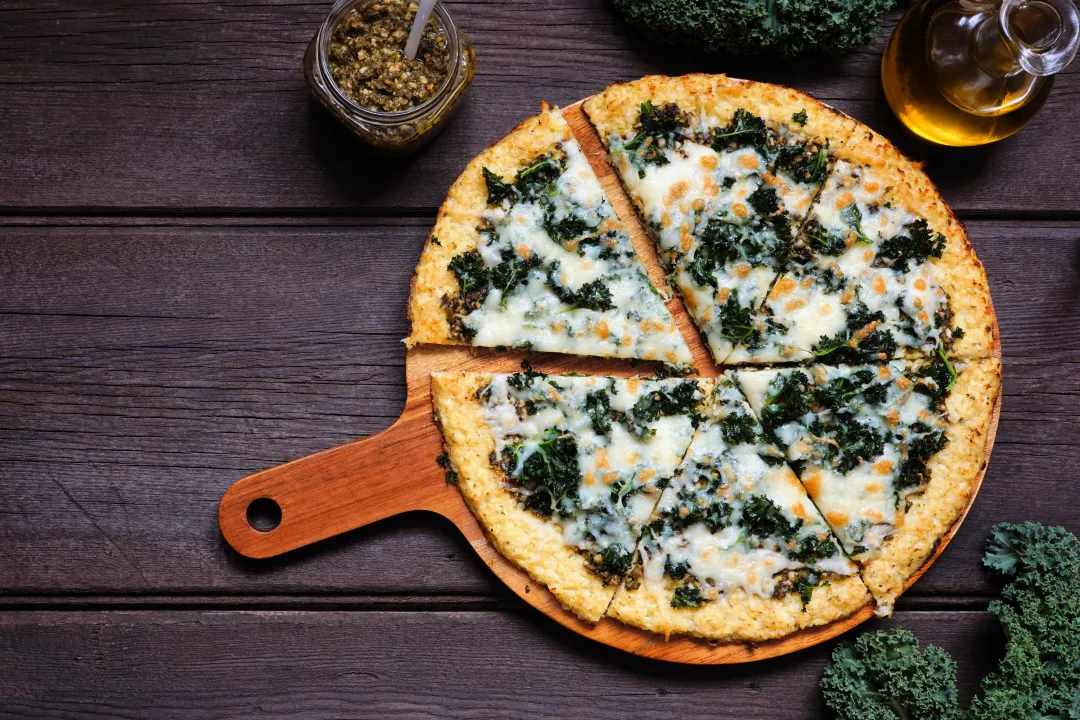

Low-carb dough works differently because it does not have the classic interaction of gluten, starch and water. That is not a disadvantage, but it changes the dough feel, baking behavior and expectation: for successful low carb baking, binding, the right amount of liquid and resting time matter more than kneading power.
Why low-carb dough does not react like wheat dough
The short answer
Wheat flour naturally contains plenty of starch and gluten. Starch absorbs water, swells during baking and helps create volume. Gluten forms an elastic network during kneading, holding gas and making dough stretchable. When a recipe is designed with fewer carbohydrates, other components take over these jobs: fiber, protein, seeds, nut or grain components and, depending on the recipe, eggs or dairy.
That is why low-carb dough can feel unfamiliar at first: sometimes stickier, sometimes more crumbly, sometimes firmer. What matters is not whether it feels like classic wheat dough, but whether binding, moisture and the baking goal work together.
Low-carb dough may look softer or more crumbly at the beginning. After a short resting time it often becomes much more stable because fiber and protein first need to absorb water.
What binds instead of gluten?
A gluten substitute is rarely just one single ingredient. In low-carb baking, stability usually comes from several building blocks:
- Fiber binds water, adds structure and supports satiety.
- Protein structures help build crumb and sliceability.
- Fat and moisture determine whether cake stays juicy, cookies turn sandy or pasta keeps its shape.
- Resting time connects everything and prevents you from adding too much flour or liquid too early.
How to adjust low-carb dough correctly
-
1Plan liquid deliberately
Low-carb flours often absorb liquid more slowly. Do not adjust everything by feel immediately; work in a controlled way. -
2Let it rest for 10–20 minutes
Only after resting can you tell whether the dough is truly too dry, too soft or just right. -
3Correct in small steps
If needed, add liquid by the teaspoon or work in a little flour. Large corrections can quickly make low-carb dough heavy. -
4Do not knead endlessly
Without a classic gluten network, long kneading does not automatically create more elasticity. Careful mixing is often enough. -
5Judge by the baked good
Bread needs structure, cake needs moisture, cookies need a tender bite and pasta needs firmness. One dough does not need to look right for everything.
Not every recipe conversion is 1:1. Especially with yeast dough, pasta and very fine sponge-style batters, it helps to start with tested low-carb recipes or suitable flour blends.
Which Locawo flour fits which low-carb dough?
If you do not want to test every blend of individual ingredients yourself, Locawo flours and baking mixes can be a practical, reliable shortcut. They are developed for low carb baking and cooking and help bring binding, taste and handling together more predictably.
- High Protein & Low Carb Allzweckmehl 1kg is the flexible all-rounder for many occasions, especially when you want to replace classic flour applications more consciously.
- High Protein & Low Carb Kuchenmehl 1kg is especially suitable for sandy baked goods such as sand cake, sandy cookies and holiday biscuits, and it is also a good choice for pound-style cakes and muffins.
- High Protein & Low Carb Pastamehl 1 kg is made for pasta lovers and works as a low-carb alternative to durum wheat semolina, for example for noodles, spaetzle or dumplings.
The most important trick in low-carb baking is patience: mix first, let it rest briefly, then decide.
Common dough issues and what they mean
If your low-carb dough looks unfamiliar, it is often a sign of balance, not failure.
- Crumbly: The dough may need more resting time, a little more moisture or stronger binding.
- Sticky: Fiber may still be swelling, or too much liquid may have been added too early.
- Dry after baking: Often the dry ingredients were too high, the baking time was too long or the recipe had too little fat and moisture.
- Dense: The dough may have been compressed too much, or the recipe may need more leavening.
Common questions about low-carb dough
Why is my low-carb dough so sticky?
Stickiness often appears because fiber and protein are still absorbing liquid. Let the dough rest briefly before adding more flour.
What is a good gluten substitute in low carb baking?
Usually it is a combination of fiber, protein, moisture and the right recipe method. Ready-made low-carb flours can help because they already bring these building blocks together in a more practical way.
Can I replace wheat flour 1:1 with low-carb flour?
Not always. Low-carb flours bind liquid differently and often need adjusted resting times. Follow recipe instructions and only correct the dough after it has had time to hydrate.
Why does low-carb dough need resting time?
Resting time gives fiber and protein time to absorb water. This makes the dough easier to shape, more stable and easier to judge.
Which Locawo flour should I use for cakes, pasta or everyday baking?
For many everyday ideas, the all-purpose flour is a good fit. For sandy cakes, cookies, biscuits, pound-style cakes and muffins, choose the cake flour. For noodles, spaetzle and dumplings, the pasta flour is the natural choice.
Low-carb dough is not harder, just different. When you think in terms of binding, liquid and resting time, low carb baking becomes much more predictable.


Comments
0