


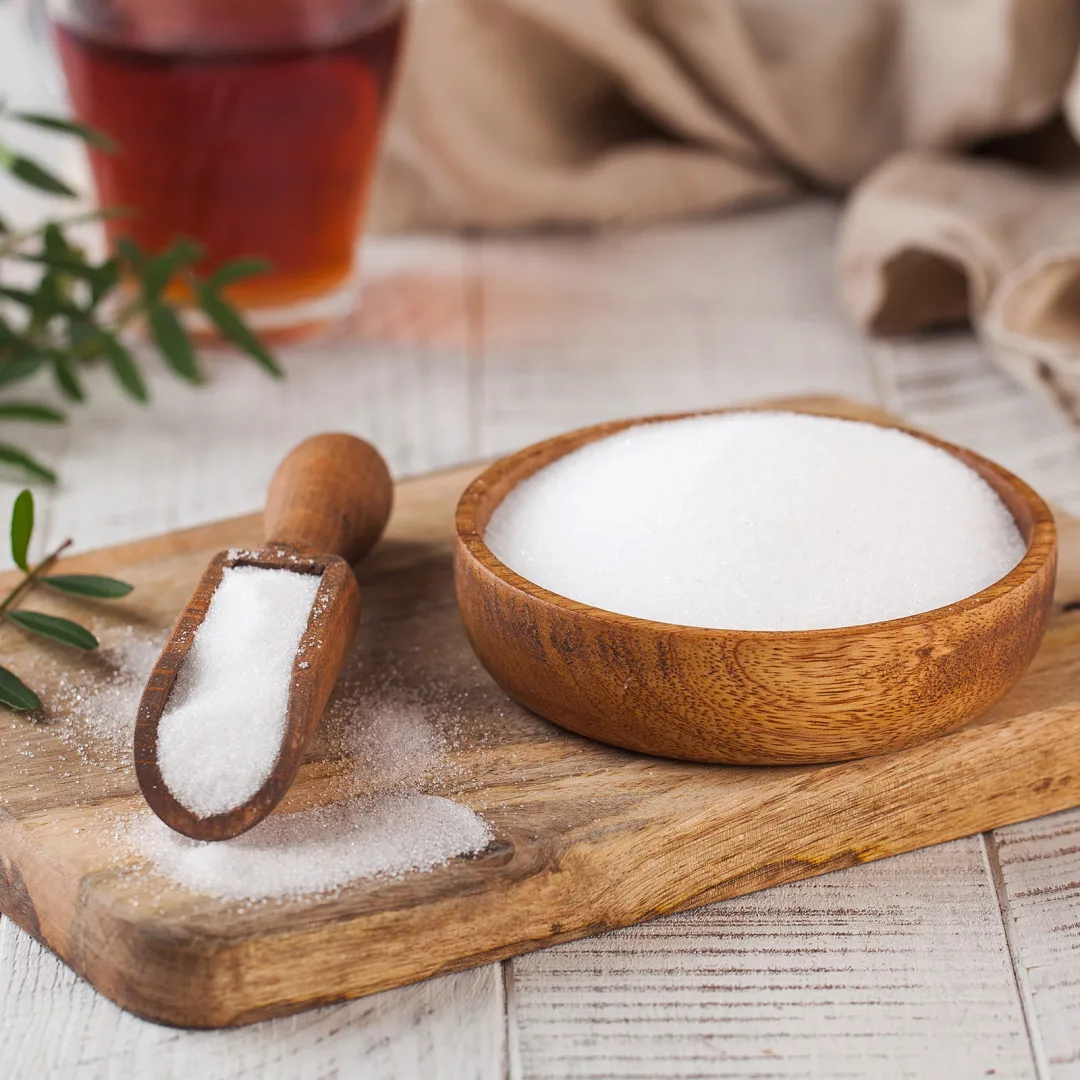

Sugar substitutes are useful when you want to reduce sugar while still baking and enjoying sweet recipes. Erythritol, xylitol & more, however, do not automatically behave like table sugar. Understanding sweetness, cooling taste, caramelization and baking behavior helps prevent dry cakes, grainy creams and failed fruit spreads.
Sugar substitutes replace sweetness, but not every function of sugar
Why 1:1 replacement does not always work
In recipes, sugar does more than sweeten. It adds bulk, binds water, affects crumb texture, supports browning and helps create structure in some doughs. Sugar substitutes such as erythritol or xylitol are sugar alcohols and have different properties: they dissolve differently, can recrystallize more easily and do not brown like classic sugar.
That is why swapping by weight only makes sense when the desired function fits. Sweetening, sprinkling, glazing, baking and gelling each call for a different form and sometimes small recipe adjustments.
The cooling taste of erythritol occurs as it dissolves in the mouth and absorbs heat. In creams, fillings or chilled desserts this can feel fresh, but in high amounts it can become noticeable.
Sweetness: how to understand erythritol, xylitol and blends
Erythritol is usually less sweet than sugar. Xylitol is closer to table sugar in taste, but it is still not an identical sugar substitute for every use. Blends can balance sweetness, volume and mouthfeel to make everyday recipes easier to handle.
- For cake batter: consider not only sweetness, but also moisture and baking time.
- For creams and glazes: finely powdered options help avoid a grainy texture.
- For fruit spreads: gelling performance and the fruit-to-sugar-substitute ratio are essential.
-
1Clarify the function first
Should the sugar substitute sweeten, add bulk, bind, sprinkle, glaze or gel? The right form depends on that function. -
2Choose the right texture
Crystalline sugar substitutes suit many batters and drinks, powdered versions suit glazes and creams, and gelling versions suit fruit spreads. -
3Keep moisture in mind
In very reduced-sugar cakes, a little more quark, yogurt, egg, butter or liquid can help keep the crumb moist. -
4Do not force browning
Erythritol does not caramelize like sugar. Vanilla, nuts, cocoa, cinnamon or roasted notes from other ingredients can add flavor. -
5Dose gradually
Work your way toward the right sweetness and tolerance. Sugar substitutes can taste different depending on the recipe and your personal perception.
Sugar alcohols can have a laxative effect or bother sensitive digestion when consumed in excess. Xylitol is also dangerous for dogs and should always be stored safely.
The best sugar reduction does not come from blind replacement, but from choosing the right form for the right recipe function.
The Locawo Sugarwonder series: choose according to use
To make reduced-sugar recipes easier to manage, it helps to look at the form of the sugar substitute. The Locawo Sugarwonder series covers common kitchen uses: crystalline sugar substitute as Locawo Sugarwonder, fine powdered sugar substitute as Powder Sugarwonder and gelling sugar substitute as Gelling Sugarwonder 2:1.
- Crystalline: for many baking recipes, desserts and hot drinks.
- Powdered: for glazes, creams, toppings and delicate surfaces.
- Gelling: for fruit spreads where sweetness and gelling power need to work together.
For batter, desserts and everyday sweetness: Locawo Sugarwonder
Locawo Sugarwonder is the crystalline sugar substitute in the series. It is suitable when you want to reduce classic sugar in cakes, desserts, coffee or other sweet ideas. It is especially helpful where a granular structure similar to crystal sugar is desired.
For smooth glazes and creams: Powder Sugarwonder
Powder Sugarwonder is useful when a sugar substitute needs to distribute very finely. For frostings, whipped creams, powdered-sugar looks or low-carb desserts, a powdered texture is often better than coarse crystals because it blends faster and feels less grainy.
For jam and fruit spreads: Gelling Sugarwonder 2:1
For fruit spreads, sweetness alone is not enough. Gelling power, cooking time and the ratio of fruit to gelling sugar substitute also matter. Gelling Sugarwonder 2:1 is designed for this use and helps make sweet fruit spreads with less sugar more predictable.
Common baking mistakes with sugar substitutes
Many mistakes happen because sugar is seen only as a sweetener. In practice, it affects almost every part of a baked good. If a cake becomes dry, cookies stay pale or a cream feels gritty, the issue is not automatically the recipe; it is often the wrong form of sugar substitute.
- Dry cakes: sugar binds water. With substitutes, check baking time and add moisture if needed.
- Grainy creams: dissolve crystalline products first or use a powdered sugar substitute directly.
- Limited browning: sugar substitutes usually do not caramelize like table sugar. Color and roasted flavor come more from other ingredients.
- Fruit spread too runny: for jam, do not only sweeten; consider gelling agent, cooking time and ratio.
Frequently asked questions about sugar substitutes
Can I always replace sugar 1:1 with erythritol?
Not always. Erythritol is usually less sweet than sugar and behaves differently in baking. Replacement is easier for simple uses such as sweetening or sprinkling than for caramel, yeast dough or moist sponge cakes.
Why does erythritol sometimes taste cool?
When erythritol dissolves, it absorbs heat. This creates a fresh, cooling impression. The higher the amount and the colder the recipe, the more noticeable this effect can be.
Does xylitol caramelize like sugar?
Xylitol can react differently when heated and does not deliver the same classic caramel note as table sugar. For caramel, crisp crusts or strong browning, adjust both the recipe and your expectations.
Which sugar substitute works best for glaze?
For glazes and smooth creams, a powdered sugar substitute is usually better than a crystalline option. It distributes more evenly and feels less grainy in the mouth.
Is a sugar substitute automatically calorie-free?
No. Products differ depending on their composition. Check the nutrition values and choose according to your recipe and nutrition goals.
Practical takeaway
Do not just replace grams; replace function: crystalline for everyday sweetness, powdered for fine textures and gelling for fruit spreads. This helps you use sugar substitutes more consciously and achieve more reliable baking results.


Comments
0